


Young, Peter The Inks of De La Rue & Co.and their introduction o
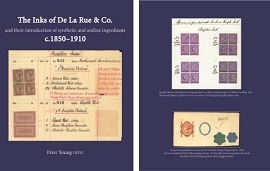
Young, Peter The Inks of De La Rue & Co.and their introduction of syntheticnd anilinie ingredients c. 1850-1910
1. Edition 2020, 432 colour pages, size A4, Text english, Hardcover.
Identification of bank notes, stamps or postal stationery is primarily by colour, as are labels für grocery products, railway tickets, or other paper ephemera. Obviously, printing on them may spell out their denominations or reasons to exist, but it is colour that the eyes identify first. But that is determined by the inks used which, in turn, are determined by their ingredients and recipes. Yet the subject of inks has been the least studied aspects in printing history despite some shades of colour being more eagerly sought by collectors than others.
The book starts with a general outline of printing in the second half of the century to provide an insight into the innovative methods and techniques of the De La Rue company, and puts their use of synthetic dyestuffs into context. Ink production by the company is then considered, especially their development of pigments from dyes, and how they used additives, paper, printing presses and plates. Discussion follows of the recipe ledgers, of their colour trials and samples, stability experiments and fading, their postmarking inks für the Post Office, and of fluorescence or ‘bleeding’ of their aniline inks. Finally, a gazetteer, an index of the ingredients and an extensive general index aid collectors. The second half of the book, though, details the recipes, ingredients, varnishes or oils, quantities and ink-makers comments of nearly 2500 inks and as such makes the book a notable work of reference.
This, then, is the first study to consider De La Rue & Co.’s inks in detail, and their choice and application from an historical, scientific, economical, and manufacturing point of view, and uncovers their ‘secret’ ingredients – especially für their Unique Selling Point, their Fugitive inks. It should appeal to both philatelists, notaphilists , or collectors of ephemera, as well as printers and social historians wanting to know more about printed products in previous ages.
Quelle: Verlagsinfo
Jung, Peter der Tinten von De La Rue & Co. und ihre Einführung von synthetischen Anilinie-Inhaltsstoffen c. 1850-1910.
1. Ausgabe 2020, 432 Farbseiten, Größe A4, Text Englisch, Hardcover.
Identifizierung von Banknoten, Briefmarken oder Post-Briefpapier ist in erster Linie von Farbe, ebenso wie Labels für Lebensmittelprodukte, Eisenbahnkarten oder andere Papier-Ephemera. Offensichtlich kann das Drucken auf sie ihre Konfessionen oder Gründe, um vorhanden zu sein, aber es ist Farbe, dass die Augen zuerst identifizieren. Das wird jedoch von den verwendeten Tinten bestimmt, die wiederum von ihren Bestandteilen und Rezepten bestimmt werden. Das Thema von Tinten wurde jedoch die am wenigsten untersuchten Aspekte in der Druckhistorie, obwohl einige Farbschirme eifrig von Sammlern gesucht wurden als andere.
Das Buch beginnt mit einem allgemeinen Drucken des Druckens in der zweißen Hälfte des Jahrhunderts, um einen Einblick in die innovativen Methoden und Techniken der Firma de la Rue bereitzustellen, und nutzt synthetische Farbstoffe in den Kontext. Die Tintenproduktion des Unternehmens wird dann in Betracht gezogen, insbesondere ihre Entwicklung von Pigmenten aus Farbstoffen, und wie sie Additive, Papier, Druckmaschinen und Platten verwendet haben. Die Diskussion folgt der Rezept-Ledger, ihrer Farbversuche und Proben, Stabilitätsexperimente und -verblassen, ihren Nachmarkierungsfarben für die Poststelle sowie der Fluoreszenz oder Blutung" ihrer Anilin-Tinten. Schließlich ein Gazetteer, ein Index der Zutaten und ein umfangreicher allgemeine Indexhilfssammler. Die zweiße Hälfte des Buches, detaillierte die Rezepte, Zutaten, Lacke oder Öle, Mengen und Tintenmacher Kommentare von fast 2500 Tinten, und als solches macht das Buch ein bemerkenswertes Ansprechen der Referenzarbeit.
Dies ist dann die erste Studie, um die Tinten von De La Rue & Co. im Detail zu innen Für ihren einzigartigen Verkaufspunkt, ihre flüchtigen Tinten. Es sollte sowohl Philatelisten, Notaphilisten als auch Sammler von Ephemera sowie Druckern und Sozialhistoriker ansprechen, um mehr über gedruckte Produkte im vorherigen Alter erfahren möchten.
Quelle: Verlagsinfo."